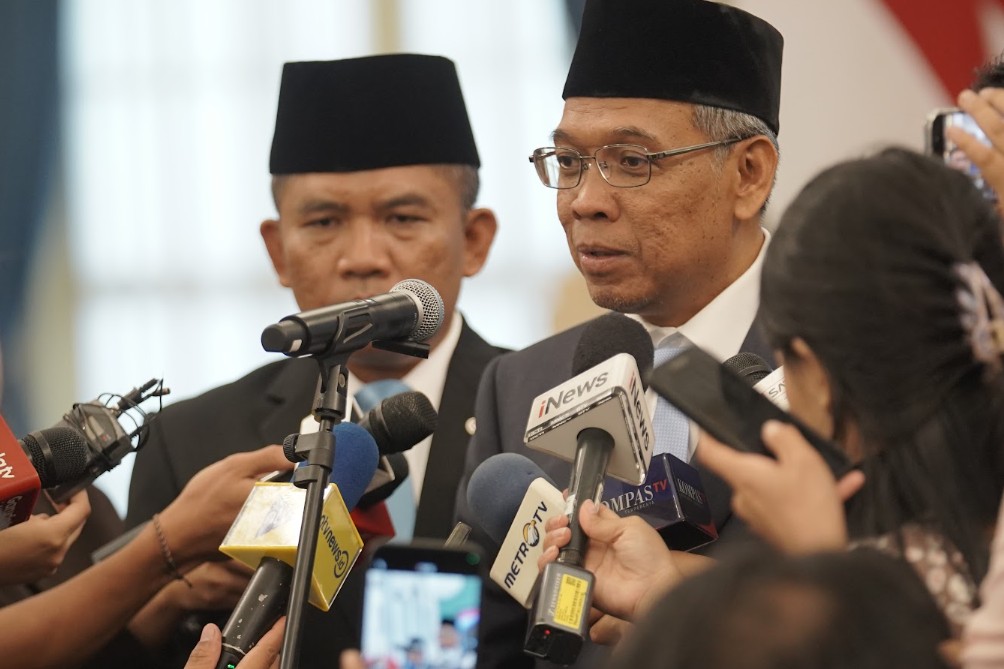
Jakarta (The Indonesian News) – Head of the National Peat and Mangrove Management Agency (BPGMN), Satyawan Pudyatmoko, has pledged to restore peatland ecosystems so they become wet and moist again. The effort will be carried out through mapping and canal blocking, as well as involving local communities in selecting environmentally friendly commodities.
Satyawan explained that peat burns easily when its natural state changes from wet to dry. According to him, canals that drain water out of peatland are one cause of drying, especially during the dry season.
“Peat burns because of efforts to change its natural character, from wet and moist to dry. This is the main problem in peatland management in Indonesia,” he said after being inaugurated by President Prabowo Subianto at the State Palace in Jakarta on Thursday (15/10).
He said restoration would begin with making peat wet again. One measure being prepared is mapping canals and building barriers so water is not quickly lost. Beyond restoring water systems, BPGMN will encourage residents to develop commodities better suited to the character of peatland.
Satyawan cited sago, jelutung, and pineapple as examples of crops that can be developed. “We also have to work with the community, activating the community’s role in managing peatland so they don’t cultivate commodities that are not water-friendly,” he explained.
Meanwhile, Deputy Head of BPGMN, Maj. Gen. Sriyanto, emphasized that peatland and mangrove restoration must go hand in hand with improving economic benefits for the community. He said both ecosystems have potential that can be developed without neglecting their conservation.
Sriyanto cited sago as a commodity with potential for development on peatland. According to him, this could support food security while providing direct benefits to the community.
“Sago turns out to have great potential for development on peatland. So the community must directly benefit from planting sago on peatland,” he said.
Economic potential, Sriyanto continued, can also be developed in mangrove areas through fisheries and tourism that preserve ecosystem function. He cautioned that business development must not damage mangroves.
“The same goes for mangroves. There are fish that can be developed. We must not create ponds that destroy mangroves, but rather develop ecosystems in a way that supports tourism and safe fishery development,” he said.
Source: Press Release, Indonesian Government Communication Agency (Bakom)







, Satyawan Pudyatmoko, has pledged to restore)