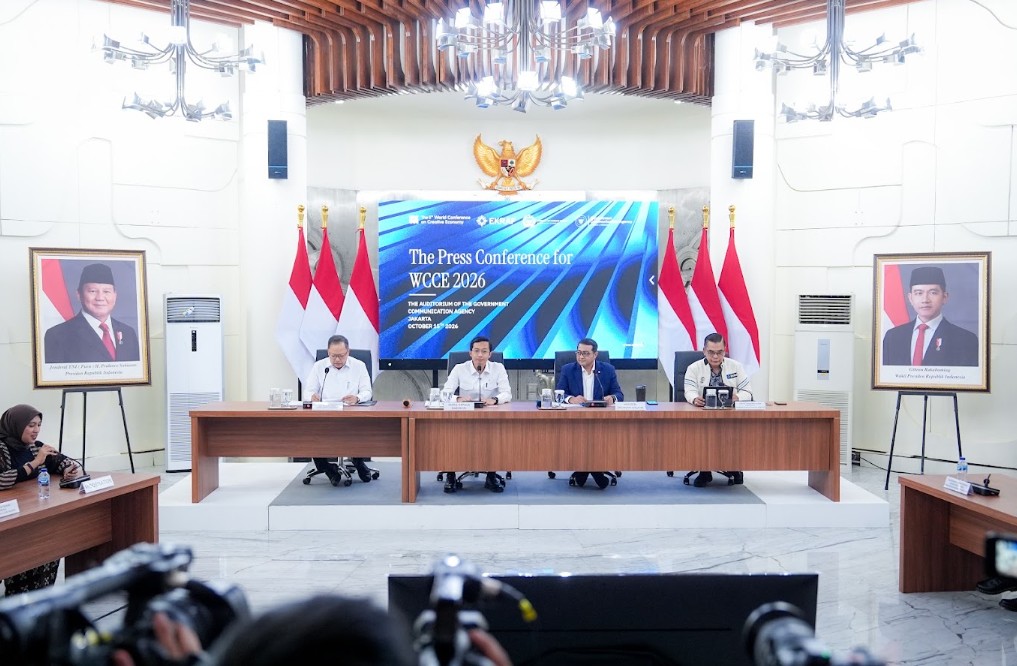
Jakarta (The Indonesian News) – Indonesia is preparing to host the World Conference on Creative Economy (WCCE) 2026, set to take place on October 21–23 at the Kempinski Hotel in Jakarta. The forum is the world’s largest international and multilateral creative economy conference.
The Ministry of Creative Economy emphasized that WCCE represents a strategic opportunity to bring Indonesia’s creative potential to the global stage, as mandated by President Prabowo Subianto through Presidential Regulation No. 37 of 2026 on the Creative Economy Master Plan (Rindekraf).
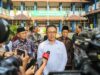
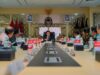
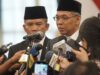
“This year’s WCCE is a momentum to strengthen Indonesia’s reputation and leadership in the international creative economy, while also advancing the creative economy as a global development agenda beyond the SDGs, which conclude in 2030,” Creative Economy Minister Teuku Riefky Harsya said at a press conference in the auditorium of the Indonesian Government Communication Agency (Bakom RI) in Jakarta on Thursday (15/10).
WCCE will bring together global creative economy leaders, policymakers, business players, creators, communities, academics, and investors. This year, WCCE carries the theme “Inclusively Creative” to bridge economic and cultural gaps regardless of age, gender, background, or region.
Since being initiated by Indonesia in 2018, WCCE has grown into a global platform that unites various elements of the creative economy ecosystem. This year’s edition is the fifth gathering of the forum and the third time Indonesia has served as host. Delegations from 80 countries and international organizations are scheduled to attend.
“The objectives of this international conference are, first, to produce a shared vision for global creative economy development, to be set out in a document called the ‘Jakarta Vision on Creative Economy,’” Riefky said.
Riefky explained that the document will cover four main pillars: artificial intelligence (AI) and digital transformation; sustainability, circular economy, and regenerative design; intellectual property and the rights of creative workers; and inclusivity of the creative ecosystem and community empowerment.
The document is expected to serve as one basis for discussions on a United Nations resolution on the creative economy as a development agenda.
In addition, the Creative Economy Minister hopes the forum will strengthen networks and collaboration within the creative economy ecosystem, which comprises government, business, academia, associations, media, and financial institutions. WCCE is also expected to boost the creative economy’s contribution to the national economy by increasing investment opportunities and expanding market access.
Bakom to Strengthen WCCE Outreach
Deputy Head of Bakom Fadli Tri Hartono said the government will continue to ensure that local creativity can connect with global creativity through measured and targeted communication. One effort is strengthening partnerships with the media.
“Media is the government’s main partner in communicating government policy. We invite (the media) to highlight the stories of creative players from various regions. Their stories are the true face of the (statistical) figures mentioned,” Fadli said at the press conference.
He emphasized that the creative economy also supports the national economy, particularly through economic empowerment in the regions. Therefore, the sector holds an important place in President Prabowo’s vision.
The Central Statistics Agency (BPS) recorded that Indonesia’s creative economy sector gross domestic product (GDP) grew 6.86 percent in 2025, with a GDP value reaching Rp1,757.87 trillion.
That growth exceeded national economic growth of 5.11 percent. BPS also recorded that the creative economy sector absorbed 27.4 million workers, or contributed 18.70 percent of the total national workforce.
This shows the large number of Indonesians working in the creative economy, from batik makers and designers to game and film creators and various other creative professions.
Bakom also emphasized the importance of collaboration and partnership with the media to help spread stories and narratives about Indonesia’s creative economy, particularly regarding the sector’s contribution to improving regional economies.
“The government views the creative economy as a symbol of national strength. This strength grows from the regions, from the hands of creators across the archipelago,” Fadli said.
Meanwhile, Bakom will not only initiate intensive dialogue with the media but also ensure that all information related to government programs in the creative economy and the hosting of this prestigious event is conveyed to the public.
“The Government Communication Agency will fully support the dissemination of WCCE information. We will ensure its key messages reach the public in language that is, of course, easy to understand,” he said.
Source: Press Release, Indonesian Government Communication Agency (Bakom)



 2026, set to take place on October 21–23)