Jakarta (The Indonesian News) – The significant strengthening of Indonesia’s financial markets signals a recovery in investor confidence in the national economy, Wednesday, June 10, 2026.
According to Indonesia Stock Exchange (IDX) data, the IDX Composite (IHSG) closed up 7.57 percent at 5,746 in trading on Tuesday (June 9). At the same time, the rupiah exchange rate on the spot market closed stronger at 18,050 per US dollar. The rupiah appreciated 120 points, or 0.66 percent, compared with its morning opening position of 18,170 per dollar.
This simultaneous strengthening of the stock market and foreign exchange market is inseparable from the various coordinated steps taken by the government together with Bank Indonesia and relevant authorities to maintain economic stability while restoring positive sentiment among market players. What are these steps?
First, increasing the attractiveness of rupiah-denominated investment instruments by strengthening the yields of government bonds (SBN) and Bank Indonesia Rupiah Securities (SRBI).
This policy aims to attract capital inflows, strengthen the domestic supply of foreign exchange, and anticipate the risk of capital outflows from the domestic market amid rising global bond yields.
As part of this strategy, Bank Indonesia previously raised SRBI interest rates. On May 13, SRBI interest rates for six-month, nine-month, and 12-month tenors were raised to 6.21 percent, 6.31 percent, and 6.45 percent, respectively.
On the other hand, the Ministry of Finance noted that government bond yields remained stable in early June. Yields on rupiah-denominated government bonds stood at 6.67 percent, while yields on US dollar-denominated government bonds stood at 5.42 percent.
Second, maintaining adequate liquidity in the money market and banking sector. The government and Bank Indonesia have agreed to strengthen liquidity management through government cash management, while still offering more attractive interest rates to the government.
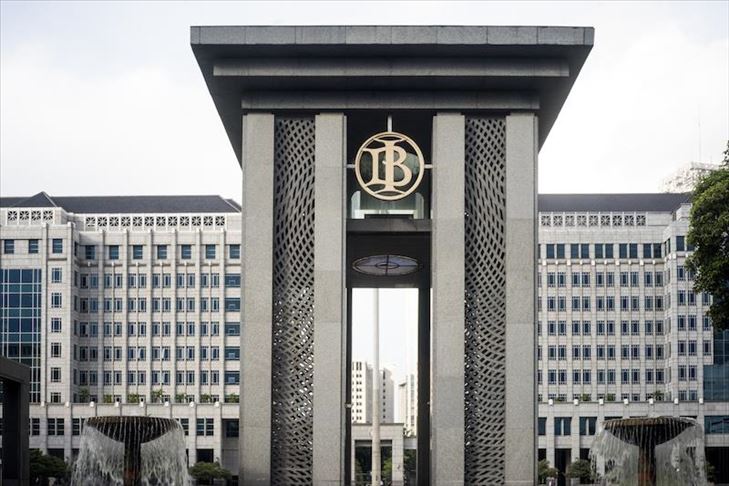
Third, Bank Indonesia has also strengthened its monetary policy mix. During its Weekly Board of Governors Meeting on June 9, 2026, BI decided to raise the BI-Rate by 25 basis points to 5.50 percent. The Deposit Facility rate was also raised to 4.50 percent and the Lending Facility rate to 6.25 percent.
Bank Indonesia explained that these policy measures were taken as a follow-up step to strengthen the stabilization of the rupiah exchange rate amid high global uncertainty, particularly due to the ongoing conflict in the Middle East.
Additionally, the interest rate hike also aims to keep inflation within the government’s target range of 2.5±1 percent for 2026 and 2027.
Finance Minister Purbaya Yudhi Sadewa assessed that the close synergy between fiscal and monetary policy has been an important factor in restoring market confidence.
“When policies are unified like that, with full synergy, it should restore market confidence in the rupiah,” Purbaya said, as quoted on Wednesday (June 10).
Indonesia’s Economic Fundamentals Remain Strong
The strengthening of the IDX Composite and the appreciation of the rupiah in trading reflect a positive investor response to the seriousness of the government and financial authorities in maintaining national economic stability amid ongoing global challenges.
It is worth noting that the National Economic Council (DEN) has affirmed that Indonesia’s current economic condition remains robust despite global geopolitical turbulence.
“Our economic fundamentals are in very good condition, even far better compared to the 1998 crisis situation. Various macroeconomic indicators show that the national economy remains solid and is far from any potential crisis,” said DEN member Mochammad Firman Hidayat.
Furthermore, Firman detailed a number of indicators that reflect the strength of domestic economic fundamentals.
He said Indonesia continues to post high economic growth, reaching 5.61 percent year-on-year in the first quarter of 2026.
Additionally, Firman highlighted Indonesia’s relatively stable inflation rate, which stood at 3.08 percent year-on-year in May 2026.
Source: Press Release from the Government Communications Agency (Bakom) of the Republic of Indonesia